
To Ping, or Not to Ping
A Bygone West Point Tradition and the Key to MAGA’s Goal

The good old days. Tradition. A time when life was simple.
I turned 60 years old this year. I’m a young old-timer, but an old-timer, nonetheless.
I remember the good old days, and I remember hearing about the better, even older days from the old-timers back in my more youthful days.
Old-timers like me know something about the former greatness the MAGA movement is looking to restore.
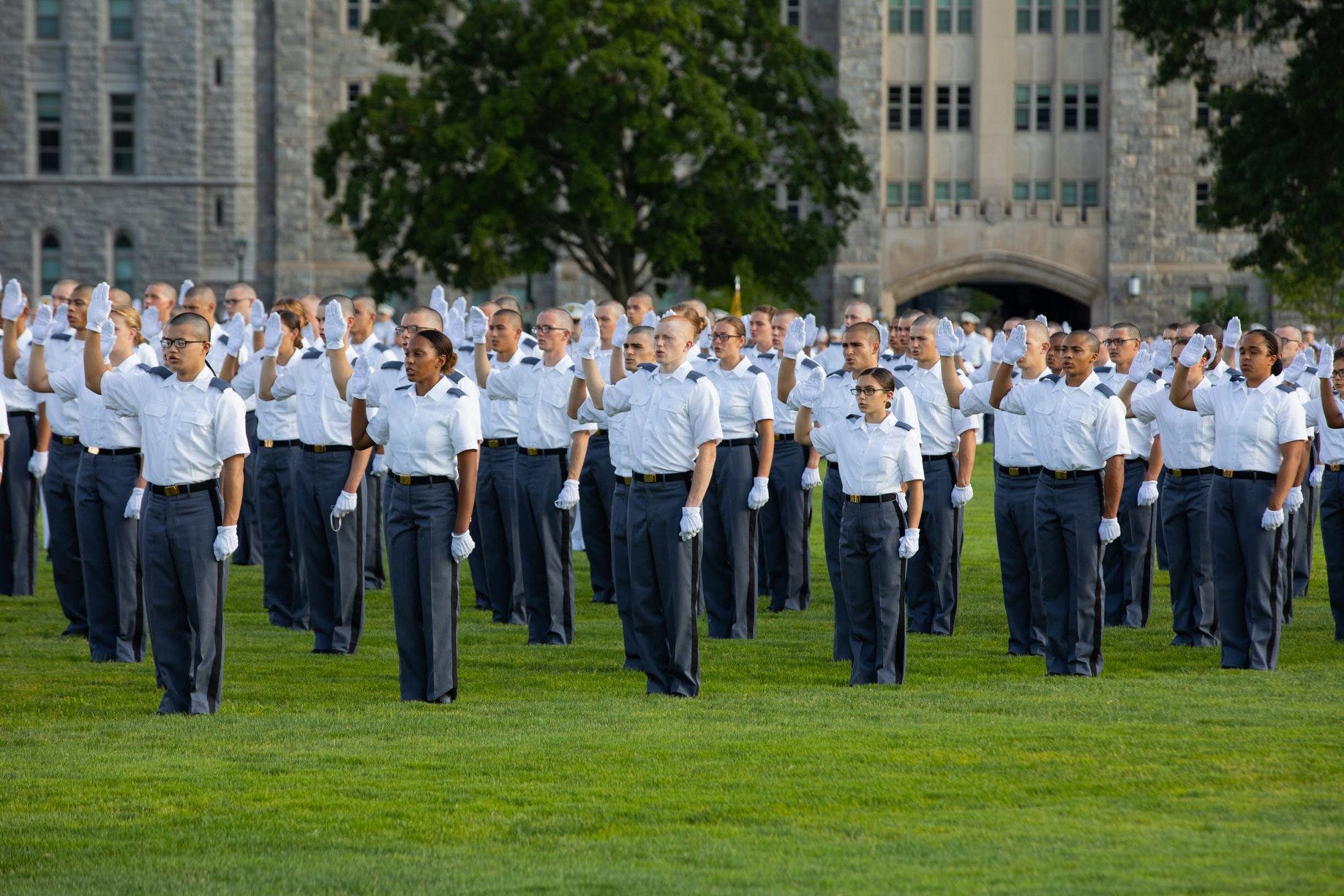
Back in the day, when dinosaurs still roamed the plain, I attended West Point. We walked uphill both to and from class. Freshman, or plebes, as freshman are referred to at West Point, traveled everywhere across campus at 180 steps per minute – double time. This double time practice reserved for plebes was called pinging. When pinging inside the barracks, it included one shoulder against the wall, looking straight forward, and crisp, squared turns when altering direction to, for instance, enter a stairwell, your room or the latrine.
Since my graduation, pinging has been eliminated as part of an ongoing Academy effort to separate traditions clearly designed to instill character building discipline from those that might otherwise just be dishing out humiliation in the alleged name of character building discipline. West Point traditions have continuously been in conflict with an underlying, counter movement constantly challenging traditions out of a belief the best is yet to come. While I did have to ping through my plebe year, the practices of bracing and squaring one’s fork from plate to mouth had been eliminated before my time. A more notable change in the pursuit of the best is yet to come was the addition of women to the corps of cadets. I entered West Point right after the fifth class ever to include women had graduated.
Yes, there are no doubt a couple of old grads (a more specific category of old-timer) out there somewhere talking about how great the old lightbulb was now that it’s being replaced by a new one. I’m not writing here to complain about the end of pinging, let alone, arguing for it to be reinstated. I’m reflecting on the bygone pinging tradition to explore a broader living tension between a general loyalty to old traditions and the forces intent on changing or eliminating those traditions to clear the way for a better future.
I don’t remember how it started, but more than once, in the course of my plebe year, I found myself in a to-ping-or-not-to-ping debate with my classmates. It’s 2 A.M. You’ve got to pee. You crawl out of your rack and open the door to head down the hall to hit the latrine. No one’s in site. There’s no sound of movement behind any of the doors between you and the latrine. Do you ping straight out the door to the opposite wall, execute a sharp right turn putting your left shoulder against that wall and march down the hallway at 180 steps per minute, or do you choose to give yourself a break and just saunter down the hall while nobody’s watching?
We’re cadets – Duty, Honor, Country! We have elected to live by a higher standard. Of course we’ll follow the rules when nobody is watching. On the other hand, cadets do come from the human race and humans are prone to choosing the path of least resistance – particularly when no one is looking.
Today, if my wife is out of town, the bed might not get made and the dishes might pile up in the sink until just before her return. I know twenty minutes of cardiovascular exercise at least three days a week is recommended by doctors for my health and longevity, but Netflix and my couch are so much more inviting than my gym membership.
Countless research studies have been conducted on human laziness. Apparently, our brains are wired to conserve energy. Even cadets can’t completely escape their human nature. It turns out that pinging was low on the list of cadet disciplines to maintain while no one was looking. Some did say “yes” emphasizing the importance of maintaining all adherence to discipline, no matter how trivial. Many said, “you’ve got to be kidding - hell no - I’m not pinging in private.”
I always fell on the side of the overzealous, Kool-Aid drinking, hook, line and sinker adherent to all rules, regulations and traditions. I was not the only pinging zealot, but we were in the minority. I faithfully pinged to 5:30 A.M. swim workout well over an hour before most of the rest of the Corps of Cadets woke up. One dark January morning, while pinging across the apron of the parade field, my leather soled dress shoes lost traction on a sheet of ice, and I literally saw my feet fly into the air – almost as if in slow motion - before landing on my head. At this hour in the morning, only swimmers and cross country runners were awake and as a courtesy to athletic camaraderie, the upper class involved in these sports probably would have given me a pass if they saw me at a sauntering pace on my way to the pool. Nevertheless, I pinged.
Maybe the “hell no” crowd had it right. Pinging was, perhaps, not an important priority that warranted adherence when no one was watching. Afterall, the Academy did eventually eliminate the practice. Maybe I fooled myself that it was important to ping at all times as a rationalization for my fear of getting caught not pinging – even when the possibility of getting caught was remote.
Looking back now forty years later, I don’t think the answer to the ping or not to ping question is important or even interesting. Here’s the rub worth thinking about: Those that answered “hell no” also responded with “bullshit” when I said I did ping when no one was watching. They didn’t believe me when I proclaimed my dedication to pinging. I had the head injury to prove it, and they still didn’t believe me.
Why is it, that when we hear someone voice commitment to an idea or principle that we ourselves do not believe, follow, or value, our response is “bullshit?” We don’t buy it. In fact, we reject it.
Our rejection of the commitment to a belief by another human being might even include a touch of offense if we perceive the subject commitment includes any sense of superiority. So, you go to church every Sunday while I sleep in – well, lah-di-dah, aren’t you high and mighty? The church goer may have no thought of superiority in his head and yet, still invoke the silent or not so silent, incredulous castigation of the late-morning-Sunday-sleeper. A lazy Christian late-morning-Sunday-sleeper may feel some guilt mixed in with his offense in response to the dedicated church goer while an atheist may otherwise include an assessment of stupidity against the church goer. Either way, the response to a valued idea or principle not in keeping with our own ideas and principles is all too often a disrespectful, aggressive – even if passive – rejection of the foreign concept. It is far more rare that we give due consideration to ideas and principles different from our own, let alone being offended by them or rejecting them with prejudice.
In the case of my fellow cadets, the “bullshit” factor is somewhat surprising. While cadets do come from the human race, one might think the brother and sisterhood that unites them in a common cause where the majority of ideas and principles are shared might foster more tolerance and flexibility where differences arise. I guess fighting the less admirable features of our humanity remains a battle for all, cadets and civilians alike.
On second thought, we were plebes and early on in our experience with our brother and sisterhood when debating to ping or not to ping. I am now decades past plebe year and frequently find myself enjoying all types of benefits, often unsolicited, from my West Point brothers and sisters regardless of any differing ideas or principles.
Like the rest of America in these polarizing times, West Point graduates certainly have a variety of different ideas and principles – even polarizing differences. Nevertheless, I get a sense, that among cadets both present and past, little would stand in the way of mutual respect among members of the Long Grey Line. Even more so, the West Point community stands ready to lend support to individual community members as needed. I’ve witnessed, many times, the rapid rallying of exceptional resources when called to help a member facing adversity.
In the end, after allowing for experience, growth and maturity, somewhere between plebe and old grad, every member of the West Point community finds it within their heart to prioritize all that we have in common while putting aside bullshit differences. So, plebes could not evaluate the importance of pinging without a bullshit conflict, but seasoned custodians of the institution could rationally evaluate the pinging tradition and reach agreement on a path to a better future fostering more confident, compassionate and capable graduates. More significantly, with two hundred years of insight into yet how far the promise of life, liberty and the pursuit of happiness has yet to grow, seasoned custodians found a way to include women in the Corps of Cadets.
Tradition is comfortable and progress, improvement, success and high achievement are never obtained through comfort. Tradition is often imbued with ages of unquestioning loyalty. The discomfort of change is exacerbated as each finger holding on to an old tradition standing in the way of change is ripped off one at a time.
Suffrage, the Labor Movement, and the Civil Rights Act all exhibited the tension between loyalty to tradition and the forces of change. The Second Industrial Revolution forced the European aristocracy to begrudgingly let go of their rural estate tradition. The Information Age has altered the labor market all but erasing the 9-5, lifelong, corporate career tradition. Tradition and the forces of change are in almost constant tension with one another.
We find ourselves today in a particularly polarized state of tension between tradition and the forces of change where protecting tradition has literally become a political party platform and radical change has become the opposing political party platform. Despite the advanced average age of our elected officials and corresponding expected maturity, the conflict today between tradition and change seems to be more plebe-to-ping-or-not-to-ping and less seasoned-custodians-of-the-institution.
The map to unwinding a polarized conflict and finding our way to a better future for all, just might be found in a time capsule buried into the foundation of America. The time capsule I’m referring to is the U.S. Military and the Military Academies.
The U.S. Army is America’s first national institution. It was established on June 14, 1775 – more than a year before the Declaration of Independence. The military tradition of risking life and limb to defend the principles of the Constitution predate both America and the Constitution. West Point was established in 1802 by the author of the Deceleration of Independence, President Thomas Jefferson.
West Point, the other Academies, and the entire Military of the United States, and its veterans, not only stand in defense of the Constitution and the ideals that bind all Americans, but they also stand as a testament to those ideals.
For the overarching U.S. Military tradition to have survived for the past 250 years sustaining the preeminent fighting force in the world, it has consequently endured constant conflict between tradition and the forces of change.
Our founding fathers not only set forth a new nation founded on the principle of liberty and justice for all, they also put a perpetual example of what a free, democratic community looks like into a time capsule – the U.S. Military.
No, soldiers do not cast a vote in a ballot box, but don’t think for a second that soldiers have no vote, no representation, no voice. Officers do not advance based on exploitive dictatorship. Officers that do not hear and satisfy the needs of soldiers will fail on the battlefield and never become generals and admirals. The best military leaders listen to soldiers and balance individual, and community needs to foster a cohesive force committed to a common goal. I contend such leadership is far more conducive to democracy than the political leadership witnessed today constantly fueling us-against-them animosity and discontent.
Less than 1% of American citizens serve in the military. Rember, the draft was eliminated over fifty years ago. Our military is entirely a volunteer force. Soldiers have elected a more spartan, difficult lifestyle in commitment to their belief in the ideals memorialized in the Constitution - the ideals upon which America was founded. Military leaders are balancing the individual and community needs and soldiers are prioritizing the ideals upon which America was founded.
The attitude, dedication, and respect demonstrated by the members of the military community and their centuries long experience and success with balancing tradition and change hold the key to the sustained greatness of America. Look past the military’s willingness to fight. The way the members of the military conduct their lives as a community is shining a light pointing the way forward through tradition and change to an ongoing expansion of the promise of life, liberty and the pursuit of happiness.
Our political leaders can do better. We citizens can do better. The US Military is providing us with a no bullshit, seasoned custodians example of how best to behave as democratic leaders and citizens.
Good piece, Philip. Happy holidays to you and your family!